Published
Negotiate from value, not the asking price: use Canadian Black Book or Red Book figures plus at least five local comparables to set your target and walk-away maximum. Buyers should inspect the car and make a reasoned first offer based on condition and history, then focus on total price. Private sellers in Ontario must provide a UVIP and a signed bill of sale to close.
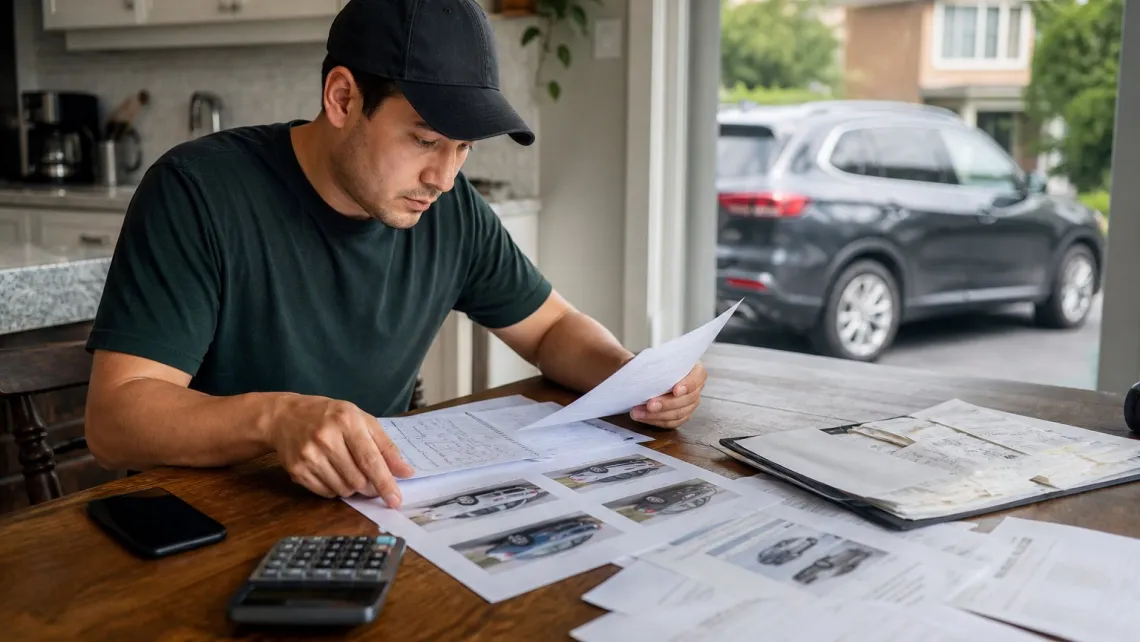
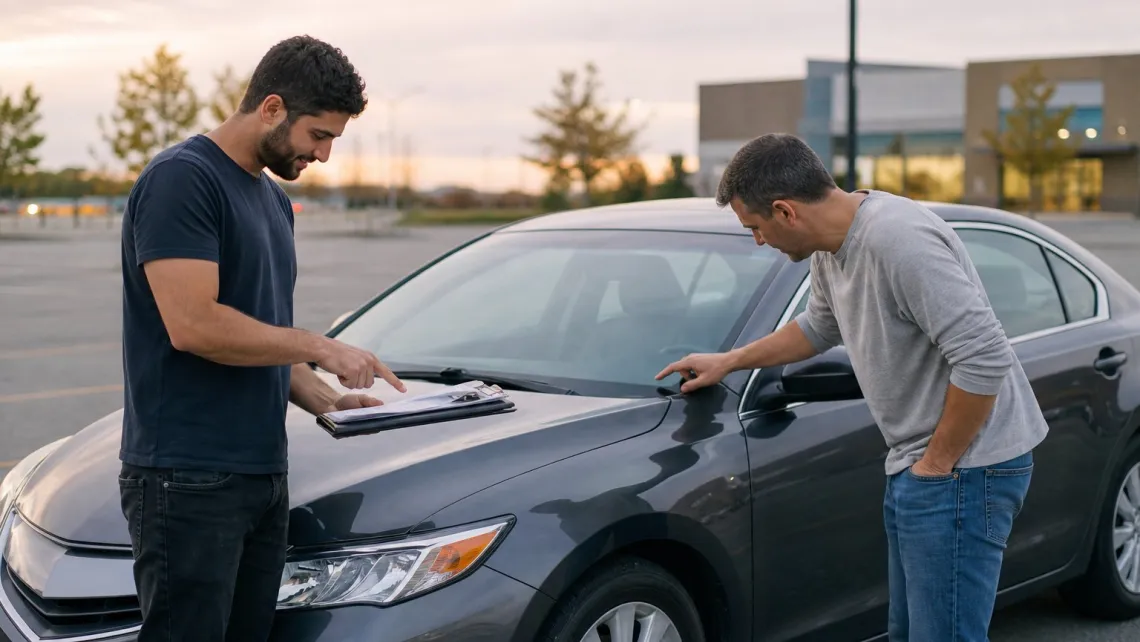
The best way to negotiate a car price is to settle on a number before you talk to anyone. Buyers should know the market value of the car. Sellers should set an asking price they can defend with comparable listings and service records. Both sides do better when they talk about the total price and put every promise in writing. A marketplace with free listings and verified sellers, like SmartMotors.ca, lets you compare many cars and many prices before you commit.
Compare Ontario Cars Before You Negotiate
Browse local listings by location, price, and more to compare similar cars before deciding what a fair offer looks like.
TL;DR
- Work out a fair market value first. Canadian Black Book and Red Book figures and comparable local listings are the usual benchmarks.
- Buyers: set a walk-away maximum, open below your target and talk about the total price, not the monthly payment.
- Sellers: price from comparables, be honest about defects, keep your service records and don’t accept an offer that is too low.
- In Ontario, a private seller must provide a Used Vehicle Information Package (UVIP) and a signed bill of sale.
- Compare several similar cars before you negotiate. Your best leverage is a good alternative.
Table of Contents
- Start with value, not the asking price
- Negotiating as a buyer
- Negotiating as a private seller
- What Ontario requires before you shake hands
- Moving a heavy deal: collecting the car
- Where SmartMotors fits
- FAQ
- Sources
Start with value, not the asking price
An asking price is an opening position. It is not the car’s value. Whether you are buying or selling, the first job is to find out what similar cars actually sell for.
Driving.ca’s guide recommends establishing a used car’s estimated market value before you make an offer, using the VIN or the make, model, year, odometer and trim. It names Canadian Black Book pricing as a starting benchmark. Then adjust for the things a book value can’t see: vehicle history, inspection findings, condition, mileage, equipment, records and local demand.
CAA also notes that its Ontario auto-advice team can provide pricing based on Red Book and Black Book information to help you judge whether a car is reasonably priced.
A practical way to build your range:
- Find the book value for the exact year, trim and mileage.
- Look at five or more similar cars in your area. Cars for sale in Ontario can be filtered by city, price, brand, model, year, mileage and fuel type, so you compare like with like.
- Note which cars are priced above or below the pack and why (mileage, accident history, trim).
- Write down two numbers: the price you would be happy with and the price at which you walk away.
The second number matters most. It stops a good conversation from turning into a bad deal.
Negotiating as a buyer
Check the car before you talk money
Every defect you find is a reason for a lower price, and it is a fair one. OMVIC, Ontario’s motor vehicle dealer regulator, recommends a thorough test drive, a vehicle history report and an inspection by a trusted mechanic. Ask for written promises and disclosures, and keep copies of the ad and all documents.
A history report tells you about accidents, liens and odometer problems that the seller may not mention. Our guide on how to read a CARFAX Canada report shows what to look for. CARFAX Canada reports are integrated into SmartMotors listings.
Make the first offer
Driving.ca gives example opening offers of 5 to 10% below estimated market value, or 15 to 25% below the asking price. These are guides, not rules. On a car priced fairly already, a 20% cut will likely end the conversation. On a car priced well above comparables, it may be reasonable.
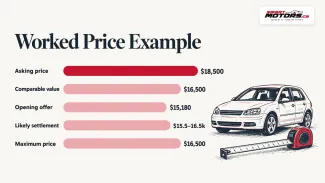
A worked example: a seller asks $18,500 for a car whose comparables sit around $16,500. Opening at 8% below $16,500 gives about $15,180. You explain why: higher mileage than the comparables, tires due for replacement. You are likely to settle somewhere between $15,500 and $16,500. Your maximum, set in advance, was $16,500.
Keep the conversation on the total price
Monthly payments hide the real cost. Agree on the total price first, then discuss financing or a trade-in as separate steps. This is the same “one thing at a time” approach that most Canadian buying guides recommend.
With a dealer, ask for the full price in writing. OMVIC says that for Ontario dealer sales, advertised prices must include all fees and charges except HST and licensing. If a quote adds extra charges on top of the advertised price, ask for them to be explained.
Tax is part of the total, too. Our article on taxes on a used car in Ontario explains how RST and HST apply and how Red Book value comes into it, so you can budget before you make an offer.
Use your alternatives
The strongest thing you can say in a negotiation is that you have other options. That is easy when you have already shortlisted several cars. Compare two candidates on:
| Factor | What to compare |
|---|---|
| Price | Asking price against book value and comparables |
| History | Accidents, number of owners, service records |
| Condition | Inspection findings, tires, brakes, rust |
| Mileage and age | Odometer against similar cars |
| Running costs | Fuel type, insurance, expected repairs |
| Warranty | Remaining coverage or none |
OMVIC suggests deciding your priorities, such as price, features, mileage and warranty, and researching reliability and depreciation before you commit. The car that costs a little more today but needs no repairs is often the cheaper choice. Use the My Favorites page to keep your shortlist in one place.
Contact the seller
Sellers on SmartMotors can be reached by secure messaging, via WhatsApp or phone. Ask specific questions first: why they are selling, whether service records exist, whether there are any outstanding liens. Polite, specific buyers get better answers and better prices.
Negotiating as a private seller
Price it so you have room
CAA’s private-sale guide says sellers should research value using a Red Book retail value or local dealer and listing comparisons. It also advises a professional appraiser for modified, restored, mint-condition or collector cars. CAA-Quebec’s guide lists the factors to price on: odometer reading, mechanical and cosmetic condition, year and model, transmission, equipment, maintenance history, recent repairs and demand.
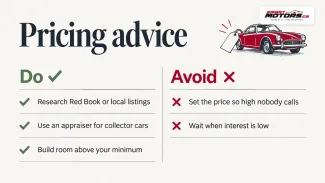
Most buyers will offer less than your asking price, so build in some room. If the lowest price you would accept is $15,500, ask a little above it. Don’t set it so high that nobody calls. If you get little interest, reassess the price instead of waiting.
Timing matters as well. See our month-by-month guide to the best time to sell a car in Ontario.
Show what supports the price
Buyers pay more for a car that is documented and honest. Before the first viewing:
- Gather service records and receipts for recent repairs.
- Clean the car inside and out and take clear photos.
- Be upfront about defects and history. If it has issues, price it accordingly; our guide to selling a car that needs repairs covers as-is sales.
- Decide whether you will provide a safety standards certificate. Here is what the Ontario Safety Standards Certificate covers, and it is valid for 36 days.
Respond to low offers
A low offer is the start of a conversation, not an insult. Ask what the buyer is basing it on. If the reasons are fair (worn tires, a missing record), consider meeting partway. If they are not, hold your number and say so politely. CAA’s guidance is to stay flexible without accepting unreasonable offers. Never agree to a price you would regret at the first sign of pressure.
To cut down on time-wasters, meet in a public place, let buyers inspect and test drive the car, and take payment in a form that is secure before you hand over the keys.
What Ontario requires before you shake hands
Price is only half of the deal. In Ontario, the official guide to buying or selling a used vehicle says a private seller must give the buyer a Used Vehicle Information Package (UVIP). The seller should also check that the VIN matches the permit and that no money is owing on the vehicle.
At handover, the seller gives the buyer:
- the UVIP
- a signed bill of sale
- the completed application for transfer
- a safety certificate, if one is required
The seller keeps their licence plates and the plate portion of the permit. Our UVIP guide covers the contents, cost and bill of sale, and the car selling checklist walks sellers through preparation and handover.
Buyers can raise these points early. A seller who has the UVIP and records ready is usually easier to deal with, and the car is easier to price with confidence.
Moving a heavy deal: collecting the car
If you buy a car some distance away, plan how you will get it home. Some buyers use a trailer, and a guide to picking, towing and loading a car hauling trailer can help you plan the logistics. Factor transport into your total budget when you decide your maximum price.
Where SmartMotors fits
SmartMotors.ca is built for Ontario, with listings in cities such as Toronto, London and Hamilton, prices in CAD, and the site available in English and French. Buyers search by city, price, brand, model, year, mileage and fuel type, and an AI-powered search chatbot helps narrow the field. That gives you the comparables to negotiate with.
For sellers, listing is free. The Free plan costs 0 CAD per month and has a limited number of monthly listings. Premium is 99.99 CAD per month and Premium Plus is 199.99 CAD per month for higher volumes, and a 14-day featured placement is 29.99 CAD one-off. Dealers can use the bulk import service. See the plans and featured options or list your car for free.
FAQ
How much can you negotiate off a used car price?
There is no fixed percentage. Driving.ca’s example opening offers are 5 to 10% below estimated market value or 15 to 25% below asking. How far you get depends on how the asking price compares with the market and what the inspection and history report show.
Should I make the first offer or wait for the seller?
As a buyer, make the first offer once you know the market value. It anchors the conversation near your number. Give a reason for it, such as comparable cars, mileage or needed repairs.
How do I negotiate when selling my car?
Price it from comparables, keep service records ready and be honest about defects. Stay flexible on reasonable offers and hold firm on unreasonable ones. If there is little interest, lower the price or improve the listing.
What documents do I need to close a private sale in Ontario?
The seller provides the UVIP, a signed bill of sale, a completed application for transfer and a safety certificate if required. The seller keeps their plates and the plate portion of the permit.
Sources
- Negotiating Used Car Price, Driving.ca
- Resources to help when buying a used car, CAA
- Selling a Used Car, CAA
- How to sell your car privately, CAA-Quebec
- Shopping for a Vehicle, OMVIC
- Buy or sell a used vehicle in Ontario, ontario.ca