Published
You can sell a car in Ontario without fixing it first, but you should disclose every known issue and put the as-is terms in writing. Set your price using comparable listings minus a realistic repair cost, with room to negotiate. Provide the UVIP and a signed bill of sale, and remember the buyer can’t register it for road use until it passes inspection.
You can sell a car that needs repairs, has accident history or has very high mileage, and you do not have to fix it first. In Ontario, the way to get the most for it is to price it honestly, describe the problems in plain words, sell it “as-is” with the paperwork done properly, and put it in front of buyers who want a project or a cheap daily driver. A free listing on SmartMotors lets you reach those buyers without paying a fee up front.
Reach Ontario Buyers for Your Car
List your car with its condition and photos on SmartMotors, a marketplace for Ontario buyers and sellers with no listing fees.
TL;DR
- You are not required to repair a car before selling it, but you must disclose known problems. Say so in the listing and in the bill of sale.
- Price from what comparable listings ask, minus a realistic repair cost, and keep room to negotiate.
- In Ontario the seller supplies the UVIP and a signed bill of sale. A car can be sold as-is without a Safety Standards Certificate, but the buyer cannot register it for road use until it passes inspection.
- If the car is branded Irreparable or Salvage, or was written off, say so up front. Some cars can only go for parts.
- Listing on SmartMotors is free, and you can add a CARFAX Canada report so buyers see the history before they message you.
Table of Contents
- First, work out what kind of damaged car you have
- Step 1: Get an honest picture of the problem and its cost
- Step 2: Price it from comparable listings, minus the work
- Step 3: Write a listing that discloses and still sells
- Step 4: List it where Ontario buyers look
- Step 5: Handle buyers, test drives and inspections
- Step 6: Complete the Ontario paperwork
- Step 7: Get paid and hand over the car safely
- Do you owe tax on the sale?
- Where SmartMotors fits
- FAQ
- Sources
First, work out what kind of damaged car you have
The right buyer and the right price depend on the answer, so start here.
A car that runs but needs work. Worn brakes, a failing transmission, a check-engine light, rust, cosmetic damage. Most private buyers can picture this car on the road once repaired. It sells well privately if the price reflects the work.
A car with accident history that was repaired. The car drives fine, but a vehicle history report shows a claim. It sells at a discount, and the key is being open about it.
A high-mileage car. Mileage on its own is not damage. As a rough guide, CAA-Quebec notes that a typical Quebec driver covers 16,000 to 20,000 km a year, so a five-year-old car should show about 100,000 km. A car well above that benchmark needs a price that reflects it, and service records that prove it was looked after.
A non-running or written-off car. An insurer declares a total loss when the cost to repair a collision exceeds the car’s value after salvage value is subtracted. Provincial branding then decides what can happen next: a car branded Irreparable can only be used for parts and can never be repaired or driven, while a Salvage brand must be repaired and inspected before it can legally be driven. The same logic applies elsewhere in Canada. Manitoba’s insurer explains that a salvageable write-off can be driven again once it passes structural and safety inspections.
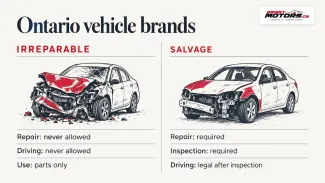
Some write-offs are not bad vehicles. Hail damage, for example, can cost more to fix than the car is worth while leaving it sound mechanically and structurally. If that is your car, describe exactly that: cosmetic damage, drives well, and what the paperwork says.
Step 1: Get an honest picture of the problem and its cost
Buyers pay for certainty. Before you set a price, find out what is actually wrong.
- Write down every known fault. Warning lights, noises, leaks, rust, dents, cracked glass, anything that does not work. You will need this list for the listing and the bill of sale.
- Collect your paperwork. CAA-Quebec recommends gathering the owner’s manual, maintenance and repair invoices, proof of completed recalls and any recent inspection reports. Receipts for past repairs help a buyer trust the rest of what you say.
- Buy a vehicle history report. It shows reported accidents and prior claims, and you will want the buyer to see the same facts you see. On SmartMotors you can add a CARFAX Canada report to your listing. If you want to know what buyers look for in one, our guide on reading a CARFAX Canada report explains it.
- Get a repair estimate for the big item. One written quote for the main problem turns “needs work” into a number. It does not mean you must do the repair.
Fix the cheap safety items
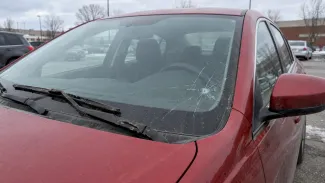
You do not have to repair the car, but a few low-cost fixes change how the car looks to a buyer. CAA-Quebec suggests fixing inexpensive safety issues such as a cracked windshield, worn wipers, burnt-out bulbs, badly worn tires and dashboard warning lights before listing. A wash and a vacuum cost almost nothing and make the same difference.
Step 2: Price it from comparable listings, minus the work
The method is simple, and it is where most sellers go wrong, usually by pricing as if the car were fine.
- Find comparable cars. Search listings for the same make, model, year and a similar mileage. ICBC’s guidance for selling a used vehicle suggests researching value by comparing online listings and gathering receipts for repairs. On SmartMotors you can browse cars for sale in Ontario and filter by brand, model, year, mileage, city and price to see what similar cars ask.
- Subtract the repair cost. Take the typical asking price for a sound car and deduct your repair quote. Buyers who take on a repair want to be paid for the hassle, so deduct a little more than the quote.
- Add negotiation room. CAA-Quebec advises setting a starting price with room for negotiation and mentioning remaining known issues in the ad.
Worked example. Say similar sound cars in your city are listed around $9,000. Your car needs a $1,800 repair, and the quote is in your hand. A fair private price might start near $6,900 to $7,000, which is the comparable price minus the repair plus a small margin for the buyer’s trouble, leaving a little room to come down. The numbers are illustrative: your own comparables and quote set the real ones.
A car with a Salvage or Irreparable brand sells for much less than a clean-title car, and a parts-only car is priced as parts. Do not price a branded car against clean-title listings.
Step 3: Write a listing that discloses and still sells
Disclosure is not just good manners. In Quebec, the consumer protection office states that you do not have to complete needed repairs before selling, but you must disclose the work that needs to be done. The principle of being straight about known defects is the safest approach in every province, and it protects you after the sale.
A strong listing for a car that needs work includes:
- A clear headline. Year, make, model, trim and the main fact: “2014 Honda Civic, 212,000 km, needs new transmission, priced accordingly.”
- The odometer reading and service history. CAA-Quebec lists the odometer reading, maintenance history, major and recent repairs, winter tires, accident history and a CARFAX report as what a description should include.
- Every known problem, in plain words. “Rear bumper dented from a parking collision, not repaired. Drives straight. Air conditioning does not blow cold.”
- The sale terms. “Sold as-is, no warranty. Safety Standards Certificate not included.”
- Photos of the good and the bad. Show the exterior, interior, dashboard, odometer, trunk, tires and engine, and add close-ups of the damage. Photos that show the damage save you from time-wasters and build trust with serious buyers.
The tone should be confident, not apologetic. A buyer who reads “needs a new clutch, quote attached, priced $1,500 under similar cars” is a buyer who already agrees with your math.
If the car has accident history
Never hide it. A history report will show a reported claim anyway. Write what happened, what was repaired and whether you have the repair invoice. A repaired car with receipts is a much easier sale than one with a vague story. If the car was written off or carries a brand, state the brand in the first lines of the listing.
Step 4: List it where Ontario buyers look
The main routes for a damaged or non-running car are a private sale, a trade-in to a dealer, or selling to a buyer who pays for scrap or parts. A private sale usually brings the most money for a car that still runs or can be fixed. Scrap and parts buyers suit cars branded Irreparable or too far gone to repair.
For a private sale in Ontario, a marketplace built for the province helps, because the buyers browsing it are shopping with Ontario cities, Canadian dollars and North American specs in mind. On SmartMotors:
- Listing is free. The Free plan costs $0 per month, with a limited number of listings each month. You upload the vehicle details and photos and your ad goes live.
- Buyers can filter by what they want. Search covers city, price, brand, model, year, mileage and fuel type, so a buyer hunting for a high-mileage commuter finds yours.
- Contact is direct. Buyers reach you by secure messaging through WhatsApp or phone.
- It works in English and French. If your likely buyer is francophone, the platform supports both languages.
If you have several cars to move, such as a few trade-ins with high mileage or damage, the paid membership plans raise your listing volume: Premium is $99.99 per month and Premium Plus is $199.99 per month. Dealers who want to bring in an existing inventory can use the bulk import service. Price and details are on the SmartMotors plans page.
If your car sits in a slow market, a featured placement puts it at the top for 14 days for a one-off $29.99. It is optional, and most sellers start with the free listing. You can check the featured cars page to see how it looks.
Timing matters a little too. Our month-by-month look at the best time to sell a car in Ontario shows when buyer demand tends to be stronger.
Step 5: Handle buyers, test drives and inspections
Expect two kinds of buyers: people who want to fix it themselves and people who want a cheap car that works. Both will ask questions about the problem, so answer them the same way you wrote the ad.
- Allow a test drive when it is safe and legal to do so. The Quebec consumer protection office recommends allowing one. Check that the car is insured and plated for the road. ICBC notes that an uninsured, unlicensed vehicle in BC needs a Temporary Operating Permit first. In Ontario, check what applies to your plates and insurance before you let anyone drive it.
- Let the buyer inspect it. The same Quebec guidance says any mechanical inspection the buyer wants is paid for by the buyer. This is a good sign: a buyer who inspects and still wants the car is a buyer who will not argue afterwards.
- Stick to your documented price. If the buyer’s inspection finds something you already listed, it does not change the price. If it finds something new, you can renegotiate or walk away.
Keep communication on the platform’s messaging or by phone until you have met and agreed. Meet in a public place for the first viewing and bring someone with you if you can.
Step 6: Complete the Ontario paperwork
Paperwork is where an as-is sale gets protected. Ontario’s government page on buying or selling a used vehicle says the seller must buy and provide a Used Vehicle Information Package (UVIP), a signed bill of sale and the completed Application for Transfer on the back of the ownership permit. A Safety Standards Certificate is needed if the car is to be registered for the road, and the buyer must register the car within six days at ServiceOntario.
The UVIP
The UVIP gives the buyer the vehicle’s registration history and includes a bill-of-sale template. Our UVIP seller’s checklist covers what it contains and what it costs.
The bill of sale
The bill of sale is your proof of what was agreed. According to the Ontario government, it should show the VIN, make, year, power source, body type, colour and model, the price, both parties’ names and addresses and the date. The original is required, and it can be handwritten. Driving.ca’s paperwork guide adds that both parties sign and that the seller removes and keeps the licence plates in Ontario.
For a damaged car, add three things in writing:
- The odometer reading.
- A list of the known problems, including any accident history.
- A statement that the car is sold as-is, without warranty, and without a Safety Standards Certificate if that is the case.
CAA-Quebec’s guide recommends this kind of detail on a bill of sale: known issues, accident history and wording that the car is sold without legal warranty. It is a Quebec guide, but the same practice protects an Ontario seller.
Safety Standards Certificate or as-is
Ontario lets a private seller sell as-is without a Safety Standards Certificate. The catch, according to NA Brokers’ summary of the rules, is that the buyer may not be able to register the car for road use until it passes inspection, so the as-is wording should be clear in the listing and bill of sale. That is why a car that needs repairs sells to a buyer who plans to repair it and get the certificate themselves. If you would rather offer the certificate, our guide to the Ontario Safety Standards Certificate covers what it covers, what it costs and its 36-day validity.
Step 7: Get paid and hand over the car safely
- Confirm payment before the keys change hands. Do not release the car, the signed ownership permit or the UVIP until you have the full agreed amount in a form you have verified with your own bank.
- Sign two copies of the bill of sale. One for you, one for the buyer.
- Complete the Application for Transfer on the back of the ownership permit together with the buyer.
- Remove your plates and keep them.
- Cancel or transfer your insurance once the car is no longer yours, and keep a photo of the signed documents.
If the buyer is collecting a car that cannot be driven, agree who arranges the tow and when pickup happens, and write the pickup date on the bill of sale.
Do you owe tax on the sale?
For most people selling a used personal car, no. The Canada Revenue Agency’s capital gains guide states that selling personal-use property such as a car usually does not result in a capital gain, because such property normally does not increase in value. Any gain must be reported, and a loss on personal-use property generally cannot be claimed. If both the cost of the car and the sale price are $1,000 or less, there is no gain or loss to report. The Income Tax Act provision that makes a loss on personal-use property nil means a damaged car sold for less than you paid creates no tax deduction. If the car was part of a business, ask an accountant.
Where SmartMotors fits
If your car needs repairs, the goal is to reach buyers who accept that and want the price. SmartMotors is built for the Ontario market, with a free listing tier, verified sellers, search filters that include mileage and year, a CARFAX Canada report integration to back up your history, and bilingual English and French support. You can start with a free listing in a few minutes, and move to a membership or a 14-day featured placement only if you need more volume or visibility. If you are a dealer with trade-ins that need work, the bulk import service gets inventory onto the platform without entering each car by hand.
Buyers can browse by area too, for example cars for sale in Toronto, which is where many local searches for a project car start.
FAQ
Do I have to repair my car before I sell it?
No. Quebec’s consumer protection office states that a seller is not required to complete needed repairs but must disclose the work that needs doing. Fix only cheap safety items and cosmetic problems if you want a smoother sale, and price the rest into the car.
Can I sell a damaged car without a Safety Standards Certificate in Ontario?
Yes, as an as-is sale, but the buyer may not be able to register the car for road use until it passes inspection. State the as-is terms clearly in the listing and the bill of sale. Our guide to the Safety Standards Certificate explains what the certificate involves if you decide to get one.
How do I sell a car with accident history?
Be open about it. Buy a vehicle history report, describe what happened and what was repaired, attach repair receipts, and price the car below comparable clean-history cars. If the car was written off or has a Salvage or Irreparable brand, say so in the first lines of the ad.
Is a high-mileage car hard to sell?
Not if it is priced for its mileage and backed by records. Service invoices, a clean description and a fair price attract buyers who want a cheap, working car. Use listings of similar high-mileage cars as your price guide.
Is the money from selling my car taxable?
Usually not. The CRA says selling personal-use property like a car generally does not produce a capital gain, and losses generally cannot be claimed. Any gain must be reported, so if you sold for more than you paid and more than $1,000, check the CRA guide.
Sources
- Buy or sell a used vehicle in Ontario, ontario.ca
- How to sell your car privately, CAA-Quebec
- Selling an Automobile to an Individual, Office de la protection du consommateur
- Sell a used vehicle, ICBC
- What happens if your car is deemed a write-off?, The Co-operators
- When your vehicle is written off, MPI
- What paperwork do I need to sell or buy a car privately, Driving.ca
- Capital Gains 2025, Canada Revenue Agency
- Income Tax Audit Manual, Chapter 29, Canada.ca