Published · Updated
In Ontario, most used cars sell best in spring (March to May) when tax refunds arrive and weather makes test drives easier. AWD vehicles, SUVs and pickups often do better in fall as buyers prepare for snow, while mid-December to February is usually the slowest. Condition, pricing and readiness still matter most.

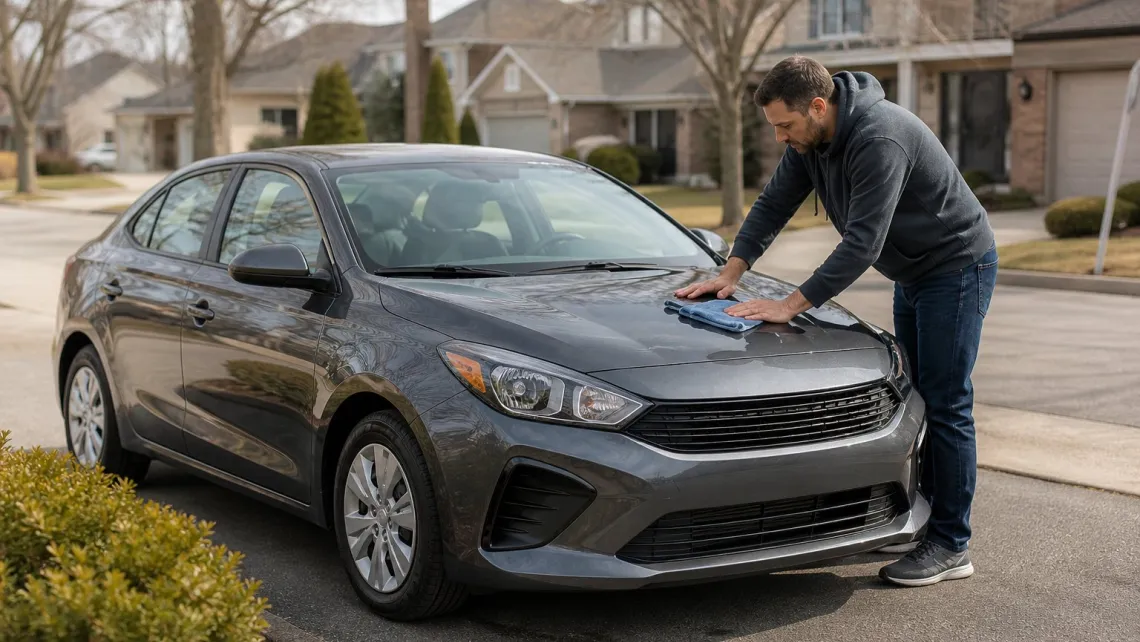
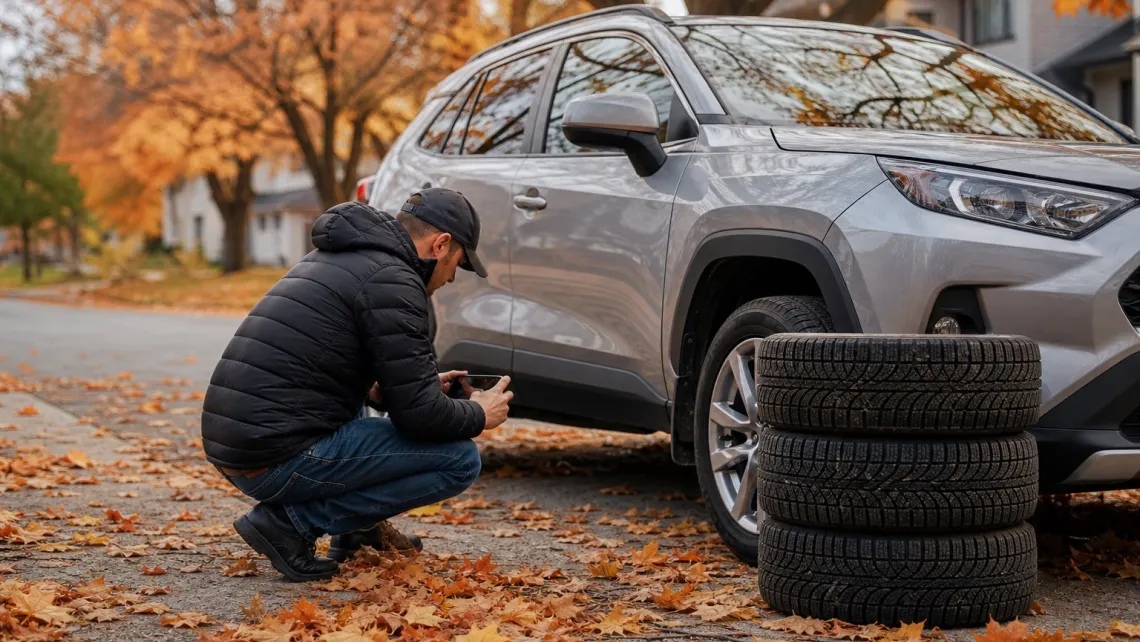
For most cars in Ontario, the best time to sell is spring, from March to May, when tax refunds arrive and the roads are clear for test drives. SUVs, AWD vehicles and pickups usually do better in fall, and the middle of winter is the quietest stretch. The most useful rule, though, is to list when your car is clean, ready and priced against real comparable ads. A listing that is live and ready at the right moment beats a perfect month you miss. On SmartMotors.ca you can list your car for free and be live in time for whichever window suits your vehicle.
List Your Car When Buyers Are Looking
Create a car listing with photos and vehicle details on an Ontario marketplace with search filters and secure messaging.
TL;DR
- Spring (March to May) is the strongest all-round window in Ontario: better weather, tax refunds and buyers who want a car before summer.
- Fall (September to November) is the sweet spot for AWD vehicles, SUVs and trucks, as buyers prepare for snow.
- Mid-December to February is usually the slowest period, with holiday spending and cold, salted roads keeping casual buyers home.
- Your car’s condition and price matter more than the calendar. A daily driver that waits through another winter of salt and kilometres loses value while it waits.
- A free listing costs nothing to start, so you can have photos, details and a price ready before your window opens.
Table of Contents
- Why the season changes what buyers do
- Month by month: what to expect in Ontario
- Does your vehicle type change the best time?
- Waiting for spring: when it pays and when it doesn’t
- The calendar matters less than price and preparation
- Get ready before your window opens
- Selling on SmartMotors.ca
- A simple timing plan for Ontario sellers
- Tips for buyers: the other side of the calendar
- FAQ
- Sources
Why the season changes what buyers do
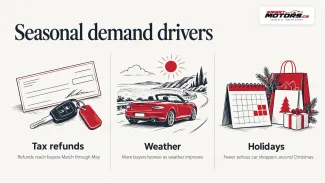
Used-car demand is not flat across the year. Three things move it, and all three show up in Ontario.
Tax refunds. Most Canadians file their income tax return in the spring, and refunds often become a down payment on a vehicle. Industry guides regularly point to March through May as the period when that money reaches buyers, which is why dealers also stock up on inventory around then.
Weather. In an Ontario winter, people do not want to stand in a driveway inspecting a car in the snow, and test drives on icy roads are a hassle. When the weather turns, more buyers browse and more of them actually show up. Seasonal weather also changes what people want: convertibles in sunshine, all-wheel-drive in the weeks before the first snow.
Holidays. Late December is full of spending on other things. Fewer people shop seriously for a car in the weeks around Christmas and New Year.
None of this is a guarantee. It is a tendency, and it varies by vehicle, by neighbourhood and by year. Treat the calendar as a way to improve your odds, not as a law.
Month by month: what to expect in Ontario
| Months | Buyer activity | Best for |
|---|---|---|
| January to February | Typically slow; cold weather and post-holiday budgets | Winter-ready AWD or 4x4 vehicles, or sellers who need to sell now |
| March to May | Typically the strongest broad window; refunds arrive, roads clear | Almost everything, especially sedans, compacts, hatchbacks and sporty cars |
| June to July | Active, with summer driving in mind | Convertibles, family SUVs, versatile daily drivers |
| August to October | Good for practical commuter cars; students and families settle back into routines | Compact crossovers, commuters, early-season AWD |
| September to November | Buyers prepare for winter | AWD vehicles, SUVs, pickups, cars with winter tires |
| December | Weak around the holidays | Only if you are ready to sell and flexible on price |
March to May: the strongest all-round window
If your car is a sedan, compact, hatchback or a typical family vehicle and you can pick your moment, aim for the spring window. Early spring can be especially useful: you get ahead of the rush of other private sellers and dealers who list once the weather warms up, and you catch buyers just as refunds are on their way.
One practical point: do not wait until the last week of May and expect the same attention. Buyers who started looking in March are often buying by April. List earlier, and you are in front of them while their search is still open.
June to August: summer buyers
Summer is good for vehicles people associate with warm weather: convertibles, sporty cars and many family SUVs. Good light also helps your photos, and buyers are happier to drive across the GTA, Ottawa or Southwestern Ontario for a test drive. If you are selling a convertible, late spring into early summer is the time to list rather than fall, when that buyer pool shrinks.
September to November: AWD, SUVs and trucks
When the first frost warnings arrive, searches for AWD and 4x4 vehicles pick up. Buyers who live outside the big cities, or who commute on highways, start thinking about traction. If you own an AWD crossover, a 4x4 pickup or a car already fitted with winter tires, fall is usually your window. Mention the winter tires in the ad and show them in a photo.
Fall also helps for another reason: your car is easier to show. It is clean, dry and the paint has not been through another season of road salt.
December to February: the quiet months
The weeks around Christmas are typically the least favourable, and January and February are still cold and slow. That does not mean you cannot sell. A well-priced, clearly photographed car still finds a buyer, particularly if it suits winter driving. But expect fewer enquiries, more price haggling and more no-shows. If you can sell in October or November instead, you will usually skip the worst of this.
Does your vehicle type change the best time?
Yes. Match the car to the season.
- AWD crossovers and 4x4 trucks: strongest from September into early December, softer in summer.
- Sedans and compacts: steady most of the year, with a lift in spring. Their seasonal swings are usually small.
- Convertibles and sports cars: best from late spring through summer; weakest in late fall and winter.
- Pickups: often active in spring when construction and landscaping season starts, and again in fall.
- Family SUVs and minivans: good in spring and early summer, and again in late summer as families prepare for the school year.
These patterns come from industry guides, and the exact percentages vary widely between sources and years, so use them as a direction, not as a promised premium. For a picture of what Ontario buyers want from rugged vehicles, see our guide to top off-road vehicles in Ontario.
Waiting for spring: when it pays and when it doesn’t
People often ask whether they should park the car and wait until March. The honest answer depends on how you use it.
Waiting usually works against you if:
- the car is your daily driver and will spend four or five more months on salted roads;
- it keeps adding kilometres, which lowers value;
- you are paying insurance and carrying the risk of one more repair;
- you already have the next car lined up.
A car sold in October and the same car sold in March are not quite the same car. The March version has had a full winter of salt, cold starts and extra kilometres. If any of that applies to you, selling in fall tends to be the better trade-off.
Waiting can make sense if:
- it is a convertible or summer-only vehicle stored in a garage, adding almost no kilometres;
- you need the car through the winter and have no replacement;
- you are not in a hurry and the car is in excellent condition.
The calendar matters less than price and preparation
Weeks of data on private sales suggest that weekday listings outnumber weekend ones, and that a good share of private sellers end up cutting their asking price after listing anyway. The lesson is not that the calendar is meaningless. It is that a car priced correctly the first time sells faster than a car priced optimistically for the right month.
To set a price:
- Search for the same make, model, year, trim and similar kilometres in your area.
- Compare against ads that are active now, not what a similar car sold for last season.
- Adjust for condition, service records, winter tires and any accident history.
- Set a price you are willing to defend, with a little room to negotiate.
On SmartMotors.ca you can filter by city, price, brand, model, year, mileage and fuel type, which makes it easy to see what comparable cars are asking in your own area, for example in Toronto or across all of Ontario. The market context also matters: for the bigger picture, including tariffs that could affect used-vehicle pricing, read our look at Canada’s 2026 automotive landscape.
Get ready before your window opens
The best time to prepare is before the best time to sell. A short checklist:
Paperwork
In Ontario, the seller is legally required to give the buyer a Used Vehicle Information Package (UVIP) when selling a pre-owned vehicle. It describes the vehicle and its Ontario history, and you order it with the VIN or licence plate number. Order it early so you can mention it in the ad. Buyers, in turn, often want a vehicle history report. SmartMotors.ca integrates CARFAX Canada reports, and our guide on how to read a CARFAX Canada report is worth sharing with a buyer who asks questions.
The car itself
- Wash, vacuum and remove personal items. Clean cars photograph and sell better.
- Gather service records, the owner’s manual and both keys.
- Fix small issues such as a burnt-out bulb or a chipped windshield, if the cost is low.
- If you have winter tires, keep them and mention them; they are a selling point in fall.
Photos and description
- Take photos in daylight: front, rear, both sides, interior, dashboard with kilometres, engine bay, tires.
- Be specific: trim, options, number of owners, accident history, recent service.
- State your price, your area and how you prefer to be contacted.
Taxes
If you are buying your next car at the same time, tax treatment can matter. Our explainer on taxes on a used car in Ontario covers RST versus HST and the Red Book value in plain terms.
Selling on SmartMotors.ca
SmartMotors.ca is built for Ontario: local cities, CAD pricing and North American specs. Listings are free, and you can upload your vehicle details and photos without hidden fees. Buyers can filter by location, price and more, and contact you through secure messaging via WhatsApp or phone. The site works in English and French, and it is mobile-friendly, so a buyer in Ottawa or Sudbury can browse on a phone and reach you in minutes.
If you want to get ahead of your seasonal window, the plan structure is simple:
| Plan | Price |
|---|---|
| Free | $0 per month |
| Premium | $99.99 per month |
| Premium Plus | $199.99 per month |
| Featured ad, 14 days | $29.99 one-off |
The Free plan includes a limited number of listings each month, which suits most private sellers with one car. Dealers with larger inventories can look at the paid membership plans or the bulk import service. A featured placement is a one-time purchase, useful when you want extra visibility in a busy window such as a spring weekend or the first cold week of October. You can see every plan on the SmartMotors.ca plans page.

A simple timing plan for Ontario sellers
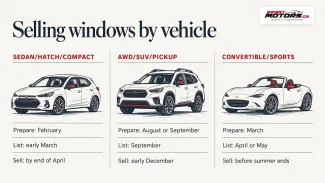
If you drive a sedan, hatchback or compact: prepare in February, list in early March, and aim to be sold by the end of April.
If you drive an AWD crossover, SUV or pickup: prepare in August or September, list in September, and aim to be sold by early December. Winter tires on the car are a bonus.
If you drive a convertible or sports car: prepare in March, list in April or May, and sell before the end of summer.
If you are a dealer: keep your inventory fresh through the year, but plan your biggest uploads for the start of spring and early fall. Bulk import means your stock goes live together instead of one vehicle at a time.
If you need to sell in winter: price against current comparable listings, photograph the car clean and dry, and answer messages quickly. Speed of reply counts when fewer buyers are looking.
Tips for buyers: the other side of the calendar
The same patterns work in reverse. Buyers searching for a convertible in November, or an AWD vehicle in June, are likely to meet more flexible sellers, because fewer people are competing for those vehicles then. If you are shopping, set up your search filters in advance and read each CARFAX Canada report carefully. Browse Ontario listings at any time of year, and use the bilingual interface if you prefer to search in French on the French site.
FAQ
What is the best month to sell a car in Ontario?
March, April and May are usually the strongest months for most cars, thanks to tax refunds and better weather. May and June can also work well for convertibles and sporty cars. For AWD vehicles and trucks, October and November are often better.
Is it a bad idea to sell a car in winter?
It is not a bad idea, but it is usually slower. Fewer buyers shop in the weeks around Christmas and during the coldest weeks of January and February, so expect more haggling. If your car is a winter-capable AWD or 4x4, you may still find good demand, and a well-priced, clean car sells in any season.
Should I wait until spring to sell my daily driver?
Often not. Waiting means another winter of salt, cold and added kilometres, plus insurance and the risk of repairs. If the car is your daily driver and you plan to sell, fall is usually a better time than the middle of winter. Waiting makes more sense for a garaged convertible or summer-only car.
Does the day of the week matter?
Somewhat. More new listings tend to be posted on weekdays than on weekends, which means competition for buyers’ attention is higher then. Whether weekday or weekend works better for your car is a judgment call. Clear photos, a fair price and fast replies matter more.
What do I need to sell a used car in Ontario?
You need to give the buyer a Used Vehicle Information Package, which you can order through the Ontario government using the VIN or licence plate. Gather service records and be ready to answer questions about the car’s history. Then create a listing with clear photos and a price in line with comparable cars.