Published · Updated
Summary
Ontario is one of the most varied off-roading provinces in the country: granite ridges of the Canadian Shield, swampy spring trails in the Ganaraska Forest, rocky climbs near Algonquin Park, deep snow north of Sudbury, and slick clay logging roads in between. Picking the right vehicle for that mix means thinking beyond the dealer brochure — you want body-on-frame durability, real low-range gearing, generous ground clearance, and a 4WD system that won’t quit on a 200-km dirt detour in February.
This guide breaks down the ten strongest off-road-capable vehicles you can buy new in Ontario for the 2026 model year, from the legendary Jeep Wrangler Rubicon to the new-generation Toyota 4Runner Trailhunter, Ford Bronco, Ram 1500 RHO, Land Rover Defender, and budget-friendly picks like the Subaru Forester Wilderness and Chevy Colorado ZR2. We cover what each does well, where it falls short for Ontario conditions, and roughly what it costs in Canadian dollars. At the end, you’ll find a practical checklist for matching a vehicle to the kind of trail — and weather — you actually plan to drive.
Why Ontario Is Different
Most “best off-road vehicle” lists are written with the American Southwest in mind: dry rock, sand, and slickrock. Ontario is its own animal. The province sits on the southern edge of the Canadian Shield, which means thin soil over hard granite — beautiful, but unforgiving on suspension. Add long winters with road salt, summers thick with blackflies and mud, and trails that can swing from dust to a foot of standing water in a week, and the equation shifts.
A few realities to keep in mind before you sign anything:
- Salt and rust. Ontario uses some of the most aggressive winter road treatment in North America. Body-on-frame trucks with good underbody coating age better here than unibody crossovers.
- Snow and ice. Even the best AWD system is only as good as the tires under it. Budget for a dedicated set of winter tires regardless of what you buy.
- Trail width. Many southern Ontario trails (Ganaraska West, Concession Lake, parts of the Hastings Heritage) were cut for ATVs first. Full-size pickups can feel wide. Mid-size SUVs and trucks often have an easier time.
- Remoteness. Trails in northeastern Ontario — Mattawa, Temagami, parts of Algonquin West — can run hundreds of kilometres from the nearest tow truck. Reliability and parts availability matter as much as outright capability.
With that framing, here are the ten vehicles worth shortlisting for 2026.
1. 2026 Toyota 4Runner — The All-Rounder
The 4Runner is the default answer for a reason, and the new-generation truck arriving for 2026 doubles down on what made it great. Toyota’s lineup now spans eight trims split between a 2.4L turbocharged four-cylinder making 278 hp and 317 lb-ft, and an i-FORCE MAX hybrid version pushing 326 hp and 465 lb-ft. Towing tops out at 2,722 kg (6,000 lb) on the gas model.
For Ontario, the trims to watch are:
- TRD Off-Road and TRD Off-Road Premium — the sweet spot for most weekend trail users, with a locking rear diff and crawl control.
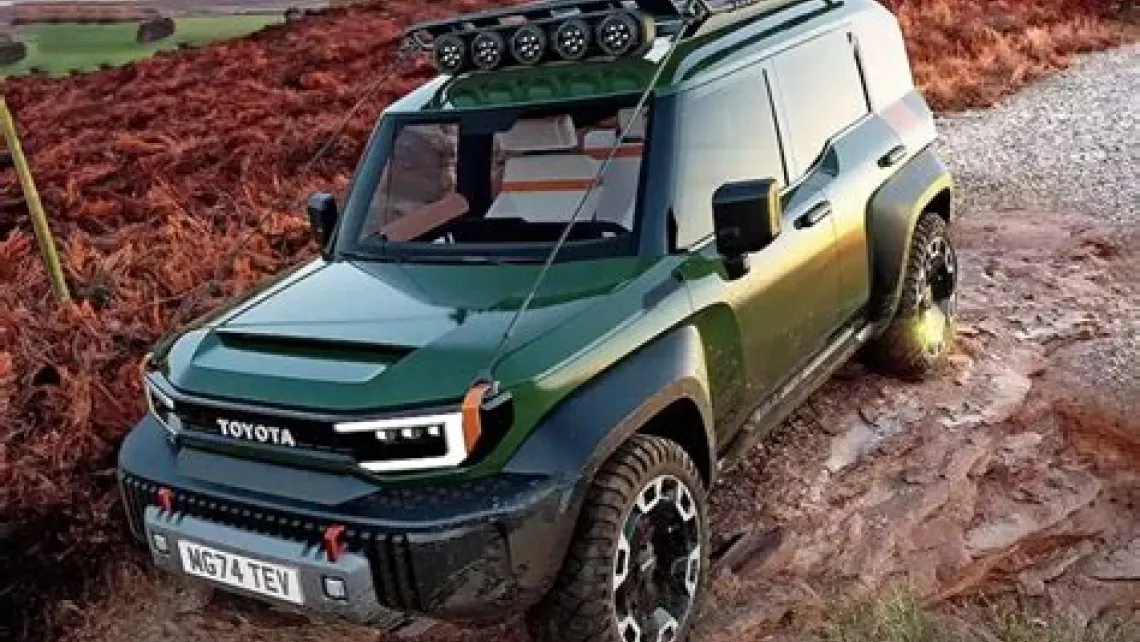
- Trailhunter — Toyota’s overlanding answer, with ARB-developed accessories, an onboard air compressor, skid plates, and Old Man Emu suspension. Aimed squarely at people who want to camp deep in Temagami or the Algonquin highlands.
- TRD Pro — the rock-crawler of the lineup.
Canadian pricing for 2026 starts around $55,270 for the SR5 and climbs to roughly $85,304 for a loaded Trailhunter. Resale value is a quiet superpower here — the 4Runner consistently holds value better than almost any other SUV on the market, which softens the sticker shock if you ever sell.
Best for: Buyers who want one vehicle that handles a Toronto commute, Highway 401 in a snowstorm, and a week off-grid near Elliot Lake without complaint.
Watch out for: Real-world fuel economy on the gas model isn’t great. If you’ll daily-drive it, the hybrid is worth the premium.
2. 2026 Jeep Wrangler Rubicon — The Purist’s Pick
Nothing in this price range out-rocks a Rubicon. Solid axles front and rear, electronic sway-bar disconnect, front and rear locking differentials, and a transfer case with a 4:1 low range — it’s all standard. The Wrangler also still does the things no SUV does: removable doors, fold-down windshield, and a community of aftermarket support that means you can fix or upgrade just about anything in a small-town Ontario garage.
The standout trim for 2026 is the new Moab 392, which pairs the 6.4L Hemi V8 with the Rubicon’s full off-road kit. It’s loud, thirsty, and absurd — and exactly the right tool for places like Gun Mountain Loop near Barry’s Bay or the California Road Trail near Arnprior, where the Canadian Shield gets genuinely technical.
For more practical buyers, the regular Rubicon 4xe plug-in hybrid is worth a serious look. It does real off-road work, and the silent EV-only crawl is a strange thrill on a quiet morning forest trail.
Best for: Trail-first buyers who don’t mind a vehicle that drives like a Jeep on the highway (because it is one).
Watch out for: Highway manners. Wind noise, steering feel, and ride quality are noticeably behind the 4Runner and Bronco. Plan accordingly if you’ll spend a lot of time on the 400-series highways.
3. 2026 Ford Bronco — The Modern Challenger
Ford’s revived Bronco has now had enough years on the market to shake out the early-build issues, and the 2026 lineup is its most refined yet. The four-door Badlands and the higher-spec Wildtrak/Raptor models are the off-road picks. Standard kit on serious trims includes locking diffs, disconnecting sway bars (in a clever electronically actuated form similar to the Wrangler’s), and a 7-speed manual option that’s increasingly rare in this segment.
Where the Bronco beats the Wrangler is on-road manners and interior tech. Where it loses ground is in long-term aftermarket support and parts availability outside major urban dealers — something to weigh if you’re based in northwestern Ontario.
Best for: Buyers cross-shopping the Wrangler who prioritize daily comfort and modern infotainment.
Watch out for: The Raptor trim’s price climbs quickly. The Badlands is the value sweet spot.
4. 2026 Land Rover Defender — The Luxury Overlander
The Defender is genuinely capable — air suspension that lifts it to nearly 12 inches of ground clearance, a wading depth approaching 900 mm, and a Terrain Response 2 system that handles snow, mud, and ruts as well as anything else on the road. It’s also expensive, complex, and built more for a Scottish estate driveway than a Sudbury logging road.
For Ontario buyers who can afford it, and who want a vehicle that looks at home outside a Yorkville restaurant and parked beside a canoe at a Killarney trailhead, the Defender 110 or 130 is hard to beat. Just budget realistically for maintenance — Land Rover dealers in northern Ontario are sparse.
Best for: Long-distance overlanders with a healthy budget and a preference for comfort.
Watch out for: Long-term reliability and dealer availability. This is a vehicle to lease, not necessarily to hold for ten years.
5. 2026 Toyota Land Cruiser — Heritage Reborn
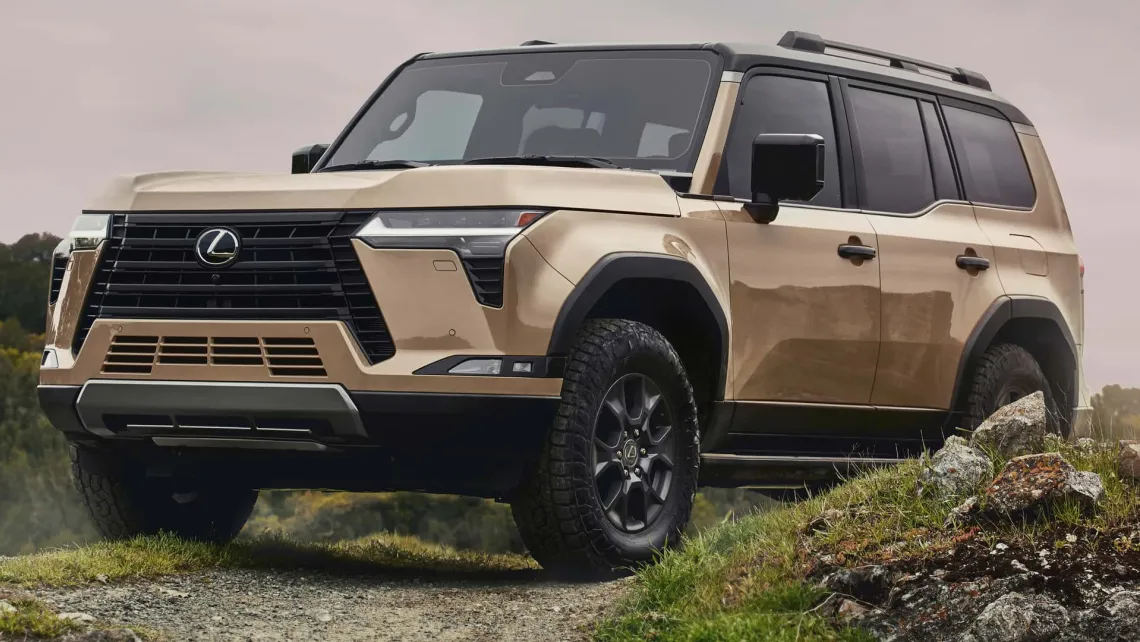
After a long hiatus, the Land Cruiser is back in North America for 2026, riding on the same TNGA-F platform as the 4Runner and Tacoma. It comes standard with a hybridized 2.4L turbo four, full-time 4WD, a locking centre and rear differential, and a generous 8-inch infotainment screen (12.3-inch optional).
What sets it apart from the 4Runner is the styling and a slightly different on-road character — more refined, more highway-oriented, and arguably the better choice if your off-roading is mostly forest service roads and cottage country gravel rather than technical rock.
Best for: Buyers who want 4Runner capability with a slightly more grown-up presence.
Watch out for: Cargo space is tighter than the 4Runner, and the second-row floor is high.
6. 2026 Ram 1500 RHO — The Half-Ton Desert Runner
The RHO replaced the V8-powered TRX in Ram’s lineup, swapping in a high-output 3.0L twin-turbo straight-six and recalibrated Bilstein dampers. It still does what the TRX did — fly across rough open terrain at speeds no other half-ton can match — for less money and with better fuel economy.
In Ontario, that desert-runner brief is a slightly odd fit (we don’t have a lot of desert), but the RHO’s suspension travel and stability make it brilliant on washboard logging roads, snow-covered backroads, and high-speed gravel. It’s also a full-size pickup, which means it tows a side-by-side, ATV, or boat without breaking a sweat.
Best for: Buyers who want a one-vehicle solution for towing toys and having serious off-road performance themselves.
Watch out for: Width. The RHO is over 88 inches wide — tight on most Ontario trails. Better for open Crown Land and gravel than tight forest single-track.
7. 2026 Jeep Gladiator — The Off-Road Pickup
The Gladiator gives you Wrangler Rubicon hardware (solid axles, lockers, sway-bar disconnect) with a 5-foot pickup bed. For Ontario hunters, anglers, and overlanders who want to throw gear in the back and head north of Highway 7, that’s a genuinely useful package.
The 2026 Gladiator is largely a carryover from the refreshed 2024–25 truck, with the 3.6L V6 as the workhorse engine. Towing tops out around 7,700 lb depending on trim.
Best for: Buyers who want a pickup bed and uncompromised off-road hardware.
Watch out for: Long wheelbase reduces the breakover angle compared with a Wrangler. Plan trail picks accordingly.
8. 2026 Subaru Forester Wilderness — The Reasonable One
Not every Ontario off-roader needs solid axles. For drivers whose “off-road” is a rough cottage road in Muskoka, a fire road in Algonquin, or a snowy concession road in February, the Forester Wilderness is shockingly competent and dramatically cheaper to own. Subaru’s full-time symmetrical AWD, an extra inch of ground clearance over the standard Forester (9.2 in), all-terrain tires, and X-Mode with hill descent control mean it’ll go almost anywhere a stock Wrangler will at trail speeds.
Where it gives up ground: no low range, no front diff lock, and a unibody that’s not built for repeated hard impacts.
Best for: Buyers who do 90% commuting and 10% light trails, and want a vehicle that’s cheap to fuel and easy to park.
Watch out for: Don’t take it rock-crawling. It isn’t built for that, and you’ll bend things.
9. 2026 Chevrolet Colorado ZR2 — The Mid-Size Value Play
The Colorado ZR2 quietly became one of the best off-road trucks in North America when GM redesigned it in 2023. Multimatic DSSV spool-valve dampers (the same general technology used in Formula 1), front and rear locking diffs, an aggressive approach angle, and 33-inch tires from the factory make it a real off-roader, not a sticker package.
In Canadian-dollar terms it lands well under a comparably equipped Wrangler Rubicon or Tacoma TRD Pro, which makes it the value pick of this list. The new Bison trim from AEV adds armoured underbody protection and skid plates worth having if you’ll hit rocks regularly.
Best for: Buyers cross-shopping the Tacoma who want better on-road manners and a sharper price.
Watch out for: Long-term reliability data on the new-gen 2.7L turbo is still accumulating. Buy the extended warranty.
10. 2026 Nissan Frontier PRO-4X (and Pathfinder Rock Creek)
Don’t sleep on the Nissan options. The Frontier PRO-4X is a refreshingly simple mid-size truck with Bilstein shocks, an electronic locking rear differential, skid plates, and a no-nonsense 3.8L V6. It’s not the fastest or the most refined, but it’s straightforward, mechanically conservative, and easier to repair than most of its competition.
The Pathfinder Rock Creek is the SUV equivalent — a three-row family vehicle with all-terrain tires, a slight lift, and tow-rated hardware, aimed at families who want one vehicle that handles school runs and a Killarney camping trip.
Best for: Buyers prioritizing mechanical simplicity and value.
Watch out for: Fuel economy is mediocre on both. Interior tech lags the segment.
How to Choose: A Quick Decision Framework
Off-roading in Ontario isn’t one thing — it’s at least four different things, and the right vehicle depends on which one you actually do.
If your trails are easy gravel and cottage roads (Muskoka, Haliburton, Bruce Peninsula), a Forester Wilderness or a base 4Runner SR5 is more than enough. Don’t overspend on capability you won’t use.
If you want light-to-moderate trail driving (Ganaraska Forest, Hastings Heritage, the Park-to-Park system around Parry Sound), look at the 4Runner TRD Off-Road, Bronco Badlands, or Colorado ZR2. Lockers help; massive lift kits don’t.
If you want serious technical trails (Gun Mountain Loop, California Road Trail near Arnprior, Bear Skulls OHV near Madawaska), the Wrangler Rubicon, 4Runner TRD Pro, and Bronco Raptor are where you start. Solid axles and good ground clearance matter more than horsepower.
If you want to overland — long, multi-day trips into northern Ontario — the 4Runner Trailhunter, Land Rover Defender, and Gladiator Rubicon are the standouts. Look for fuel range, sleeping capacity, and aftermarket support.
Whatever you pick, three things matter more than the badge on the hood:
- Tires. A good set of all-terrain tires turns an average vehicle into a competent one. A bad set of highway tires turns a Rubicon into a liability in mud.
- Recovery gear. A tow strap, a shovel, traction boards, and a basic first-aid kit live in the truck year-round. In northern Ontario, also pack a satellite communicator — cell coverage disappears fast.
- A buddy. Most experienced off-roaders won’t drive a remote trail alone. Find a local club — the Ontario Federation of 4WD Recreationists is a good starting point — and learn from people who know the trails.
The Bottom Line
The 2026 lineup is the strongest year for off-road vehicles Ontario buyers have seen in a long time. Toyota’s new 4Runner and Land Cruiser, the Jeep Wrangler’s continued refinement, Ford’s matured Bronco, and value picks like the Colorado ZR2 mean there’s a genuinely good vehicle at almost every price point — and they’re all available through Ontario dealers.
The question isn’t really which one is best. It’s which one fits the trails you’ll actually drive, the winters you’ll actually survive, and the budget you’ll actually live with. Pick honestly, equip it properly, and Ontario opens up in a way most drivers never see.
See you out there.